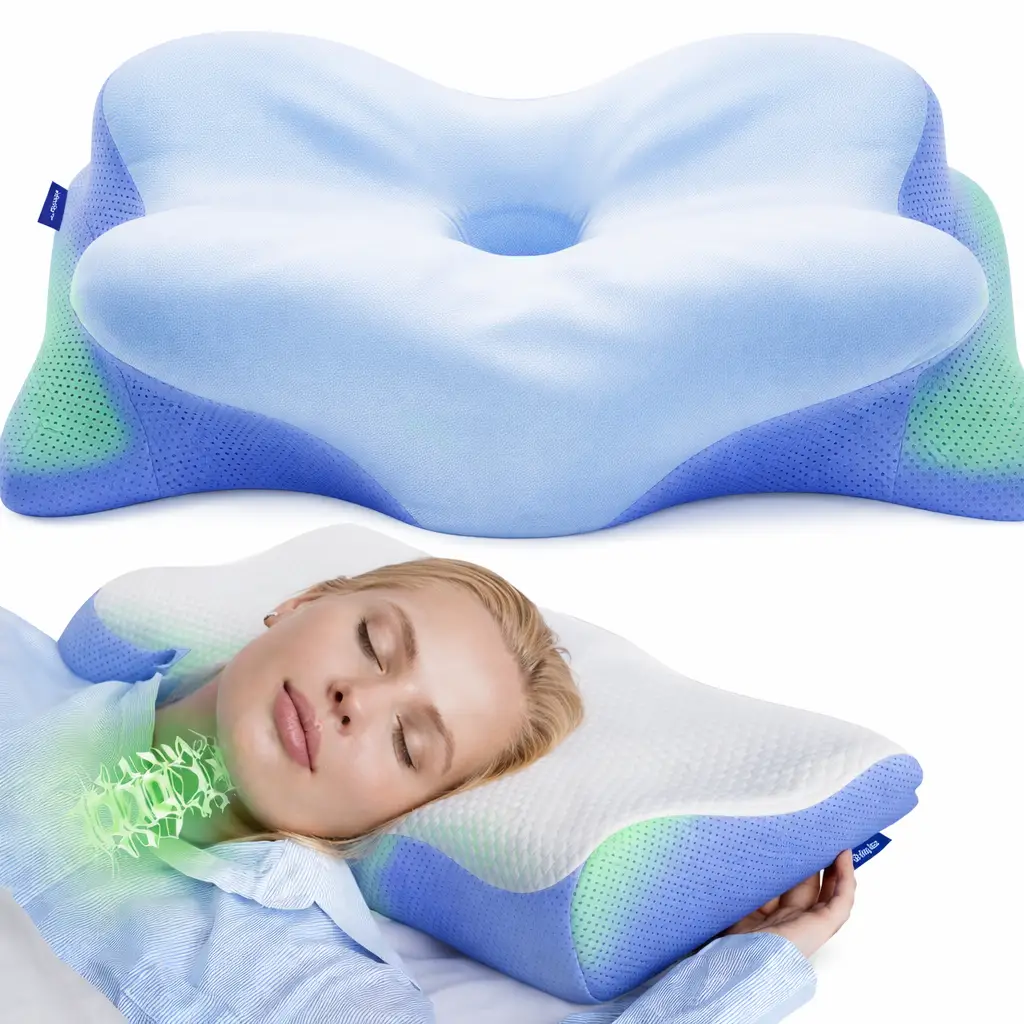
How Memory Foam Adapts to Support Your Neck
The material science behind why memory foam molds to your shape instead of pushing back
Memory foam feels different from a regular pillow the moment you lie down, and that's not a marketing trick — it's chemistry. This guide explains what memory foam actually is, why it behaves the way it does, and how that behavior applies specifically to neck support in a pillow like the Derila Ergo Pillow.
What memory foam actually is
Memory foam is a type of polyurethane foam, technically known as viscoelastic foam. The name describes exactly how it behaves: "visco" refers to a viscous material that resists motion and moves slowly under force, while "elastic" refers to its ability to return to its original shape once that force is removed. Ordinary foam, like the padding in a couch cushion, is almost purely elastic — it springs back immediately. Memory foam is engineered to do both: flow slowly under pressure, then recover slowly afterward.
This isn't a new invention built specifically for pillows. Memory foam traces back to research from the 1960s aimed at improving impact protection and cushioning, and it later moved into mainstream mattress and pillow manufacturing because the same slow-responding, pressure-distributing behavior that made it useful there also makes it useful for supporting the human body during sleep.
What sets memory foam apart from other pillow fills, like down or polyester, is that it is manufactured with specific chemical additives that make it temperature sensitive. This is the single most important thing to understand about how it works: memory foam is firmer when it's cool and softer once it warms up, and your body heat is what triggers that shift every time you lie down.
The Derila Ergo Pillow's core uses this same high-density, adaptive memory foam, shaped into a butterfly contour rather than a flat block, so that the softening and molding effect happens specifically where your head and neck need it.
How memory foam adapts to your neck, step by step
- Initial contact: At room temperature, memory foam is at its firmest. When you first rest your head and neck on it, the surface feels supportive but not yet fully molded.
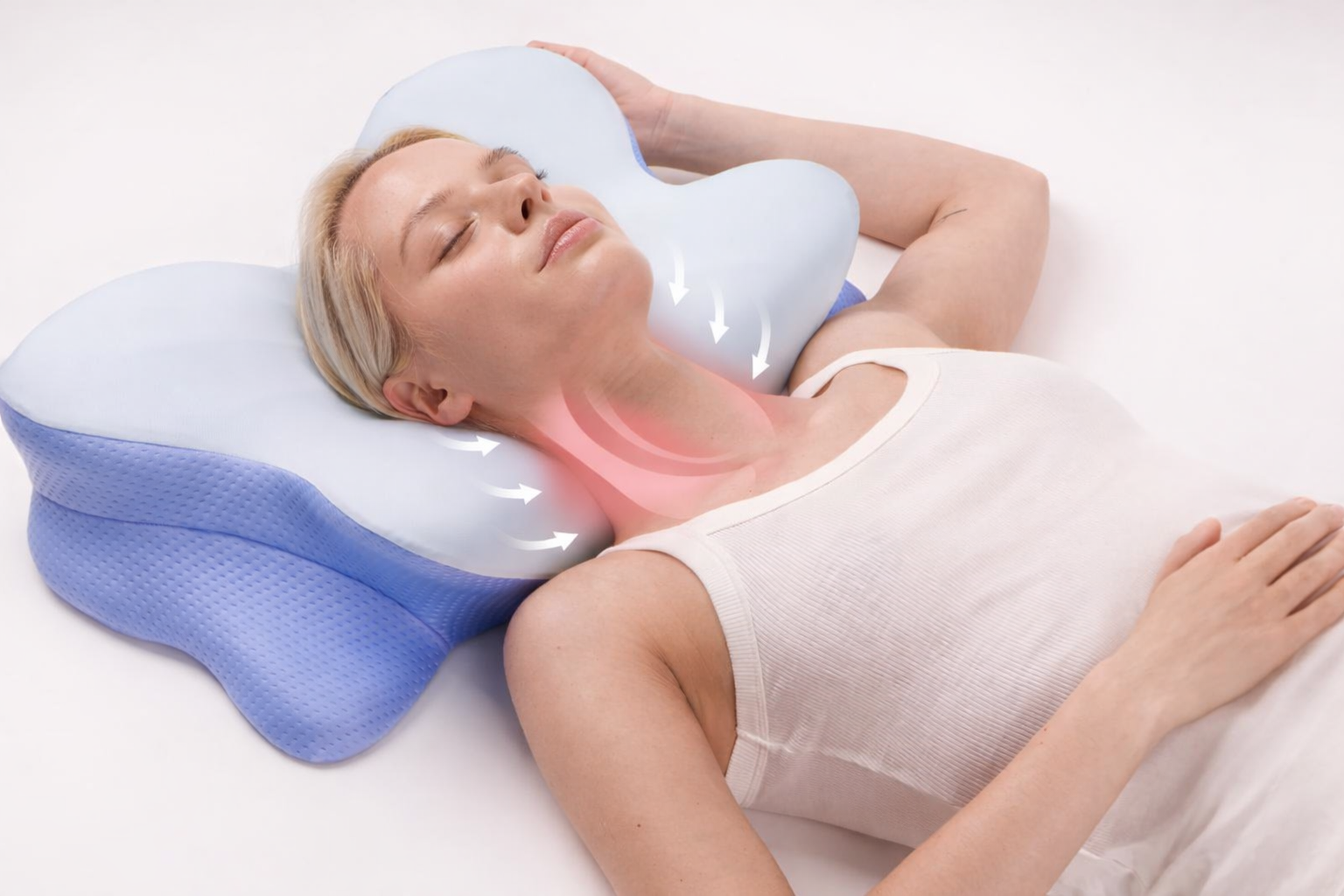
- Heat transfer begins: Body heat starts transferring into the foam's cell structure. Because the material is deliberately formulated to respond to temperature, this warmth causes the polymer to loosen and become more pliable.
- Slow, even contouring: As the foam softens, it doesn't just compress — it flows gradually around the shape pressing into it. This is the "viscous" part of viscoelastic: rather than snapping into a new shape, the foam eases into it over roughly a few minutes.
- Pressure redistribution: As the foam contours, the surface area in contact with your head and neck increases. Instead of your neck's weight concentrating on a small area, it spreads across a wider, custom-molded surface, which is the core mechanism behind memory foam's pressure-relief reputation.
- Slow recovery: When you get up, the same viscoelastic property works in reverse — the foam doesn't spring back instantly. It slowly returns to its original shape over several seconds to a couple of minutes, ready to adapt again the next time it's used.
In a pillow specifically, this cycle repeats every time you shift position overnight. A contoured design like the Derila Ergo Pillow is built so that this molding happens within a shape that already has a lower center for the head and raised wings for the neck, rather than expecting a flat slab of foam to create that structure from scratch.
Why memory foam feels different depending on the room
Because viscoelastic foam responds to heat, its feel changes with the environment. In a colder bedroom, memory foam starts firmer and takes slightly longer to soften. In a warmer room, or under a heavier blanket, it softens faster and can feel plusher sooner. This is completely normal behavior for the material and not a sign of a defective pillow.
This same property is also why memory foam can trap warmth against the skin: the closer, fuller contact that gives you pressure relief also limits airflow compared to a looser fill like down or fiber. That trade-off is why many memory foam pillows, including designs like the Derila Ergo Pillow, are paired with a breathable outer cover — the cover's job is to offset some of that heat retention while the foam core still does the structural work of supporting your neck.
What this means for neck support specifically
Even pressure distribution
A flat, non-adaptive pillow leaves gaps under the neck's natural curve. Memory foam fills that gap by molding into it rather than leaving it unsupported.
Consistent shape retention
Because memory foam resists permanent compression better than loose fiber fill, a foam pillow like the Derila Ergo Pillow is less likely to flatten out after a few months of regular use.
Personalized fit over time
The molding process responds to your specific head and neck shape each night, which is different from a fixed-shape pillow that fits everyone the same way, or no one particularly well.
Adjustment period is expected
Because the contouring and recovery are gradual by design, it's normal to need a few nights to get used to a memory foam pillow's response compared to a soft, fast-rebounding fiber pillow.
How to judge memory foam quality
Not all memory foam is manufactured to the same standard. A few practical checkpoints can help you evaluate any memory foam pillow, including the Derila Ergo Pillow:
- ✓Density: Higher-density memory foam generally holds its shape longer and resists premature flattening better than low-density foam.
- ✓Recovery speed: Foam that springs back too quickly after pressure is removed is likely a lower-quality blend rather than true viscoelastic foam.
- ✓Cover breathability: A breathable, soft-touch cover helps offset the heat retention that comes with close foam contouring.
- ✓Initial odor: A brief factory smell after unboxing is normal off-gassing; it should fade after airing the pillow out, not linger indefinitely.
Memory Foam & Neck Support FAQs
It's temperature sensitive — firmer at room temperature, then gradually softer as it absorbs heat from your head and neck.
It molds closely to the head and neck, spreading pressure across a wider surface rather than one point, which is the principle behind pillows like the Derila Ergo Pillow.
It can retain more heat than open, breathable fills since the same close contouring that supports your neck also limits airflow — a breathable cover helps offset this.
Freshly made foam can carry a temporary factory smell from manufacturing, known as off-gassing, which typically fades within a day or two of airing out.
More guides on pillow support and comfort
Tips for Improving Sleep Comfort with the Right Pillow
Matching pillow shape and firmness to your sleep style.
Read the guide →Understanding Cervical Pillows: Features and Benefits
What makes a pillow "cervical" and who benefits most.
Read the guide →Back to Derila Ergo Pillow
See materials, pricing, and the full product overview.
Visit the main page →