
Tips for Improving Sleep Comfort with the Right Pillow
What actually changes when you upgrade the pillow you sleep on every night
Most people spend a lot of energy picking a mattress and almost none picking a pillow, even though the pillow is what your head and neck rest on for roughly a third of your life. This guide walks through what genuinely affects sleep comfort — loft, firmness, material, and sleep position — and where a contoured design like the Derila Ergo Pillow fits into that picture.
Why pillow comfort affects more than just your head
A pillow's main job is to keep your head, neck, and spine in a neutral line while you sleep. When that alignment is off, even slightly, your neck and shoulder muscles have to work through the night to compensate. That ongoing low-level effort is a common, often overlooked contributor to morning stiffness, tension headaches, and restless sleep.
Sleep researchers and physical therapists consistently point to the same idea: there is no single "best" pillow for everyone, but there is a best pillow for your body, your sleep position, and your mattress firmness. Comfort and support aren't separate goals — a pillow that feels soft but doesn't support your neck is just as likely to leave you sore as one that's too firm and too high.
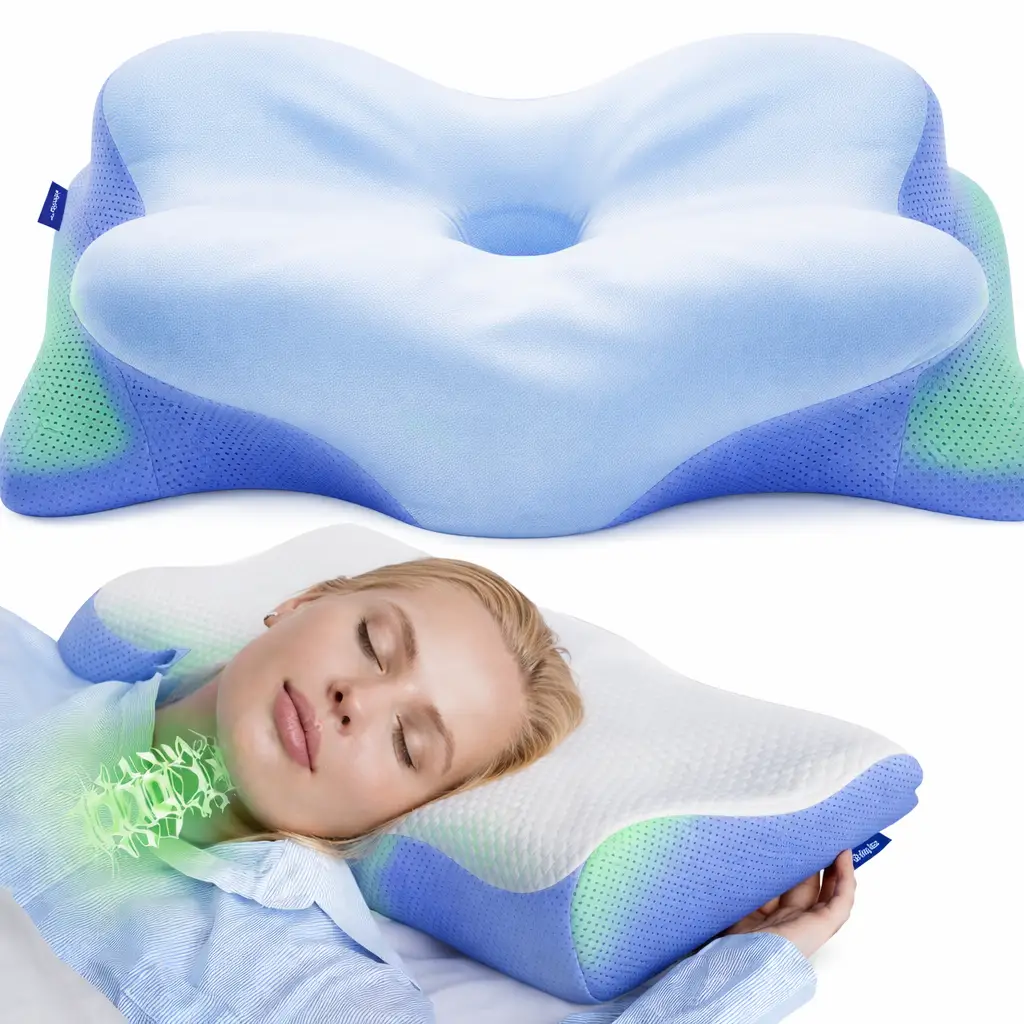
Poor sleep posture doesn't just affect how you feel when you wake up. Disrupted, uncomfortable sleep can fragment your sleep cycles, and waking repeatedly to adjust a lumpy or flat pillow reduces the amount of deep, restorative sleep you get overall. This is part of why upgrading to a more supportive, well-shaped pillow — such as the ergonomic, butterfly-contoured design used in the Derila Ergo Pillow — is often one of the simplest changes with the most noticeable payoff.
The good news is that improving pillow comfort doesn't require guesswork if you understand the handful of factors that actually matter: your sleep position, the pillow's loft (height), its firmness, and the material it's made from.
Identify your sleep position and what it needs
Your dominant sleep position is the single biggest factor in what kind of pillow will actually improve your comfort.
Back Sleepers
Need a medium-loft, medium-firm pillow that fills the natural curve of the neck without pushing the chin toward the chest. Too high a pillow forces the head forward; too flat lets it drop back.
Side Sleepers
Generally need a taller, firmer pillow — often four to six inches — to fill the gap between the ear and the mattress created by the shoulder, keeping the spine level rather than bent sideways.
Stomach Sleepers
Do best with a thin, soft, low-loft pillow, since a thick pillow forces the neck into an unnatural backward angle. Some experts recommend a flat pillow under the hips as well.
Combination Sleepers
Benefit from a medium-loft, moderately adaptive pillow — or a contoured shape like the Derila Ergo Pillow — that offers reasonable support across more than one position.
Loft, firmness, and material: what to actually look for
Once you know your sleep position, these three specs determine whether a pillow will feel supportive or simply soft.
| Material | Typical Feel | Notes |
|---|---|---|
| Memory foam | Firm, contouring, slow-responding | Molds closely to the head and neck; resists flattening better than fiber fill; can retain heat. |
| Latex | Firm with light bounce | Naturally breathable and durable; tends to run firmer than memory foam. |
| Down / feather | Soft, plush | Compresses quickly and needs regular fluffing to hold loft. |
| Buckwheat | Very firm, adjustable | Shell casings shift to hold shape, but the texture is not for everyone. |
| Polyester / down alternative | Soft to medium | Budget-friendly, but usually loses shape faster than foam or latex. |
Loft (the pillow's height when it's lying flat) and firmness work together: a taller pillow that's too soft will still let your head sink too low, while a shorter pillow that's too firm won't fill the gap a side sleeper needs. This is part of why contoured designs — like the raised-wing, lower-center shape used in the Derila Ergo Pillow — try to solve height and firmness at the same time by building the support directly into the shape rather than relying on loose fill alone.
Signs your current pillow is working against you
- ✓You wake up with neck or shoulder stiffness that fades within an hour of getting up.
- ✓Your pillow feels flat, lumpy, or noticeably thinner than when you bought it.
- ✓You find yourself folding, punching, or repositioning the pillow multiple times a night.
- ✓You sleep more comfortably on a hotel or guest pillow than your own.
- ✓It has been more than two to three years since you last replaced it.
Small changes that improve sleep comfort tonight
Match pillow height to your mattress
A softer mattress lets your shoulder sink in more, so you may need a slightly lower pillow than you would on a firm mattress.
Give a new pillow time
Contoured or firmer materials, including memory foam pillows like the Derila Ergo Pillow, often take a few nights to feel fully natural as you adjust from a softer, flatter pillow.
Add support, don't just add softness
A side pillow between the knees, or a small flat pillow under the lower back for stomach sleepers, can reduce strain that the head pillow alone can't fix.
Keep it clean and ventilated
A washable outer cover and a well-aired pillow stay more comfortable night to night, especially with foam cores that shouldn't be machine washed directly.
Where the Derila Ergo Pillow fits into this
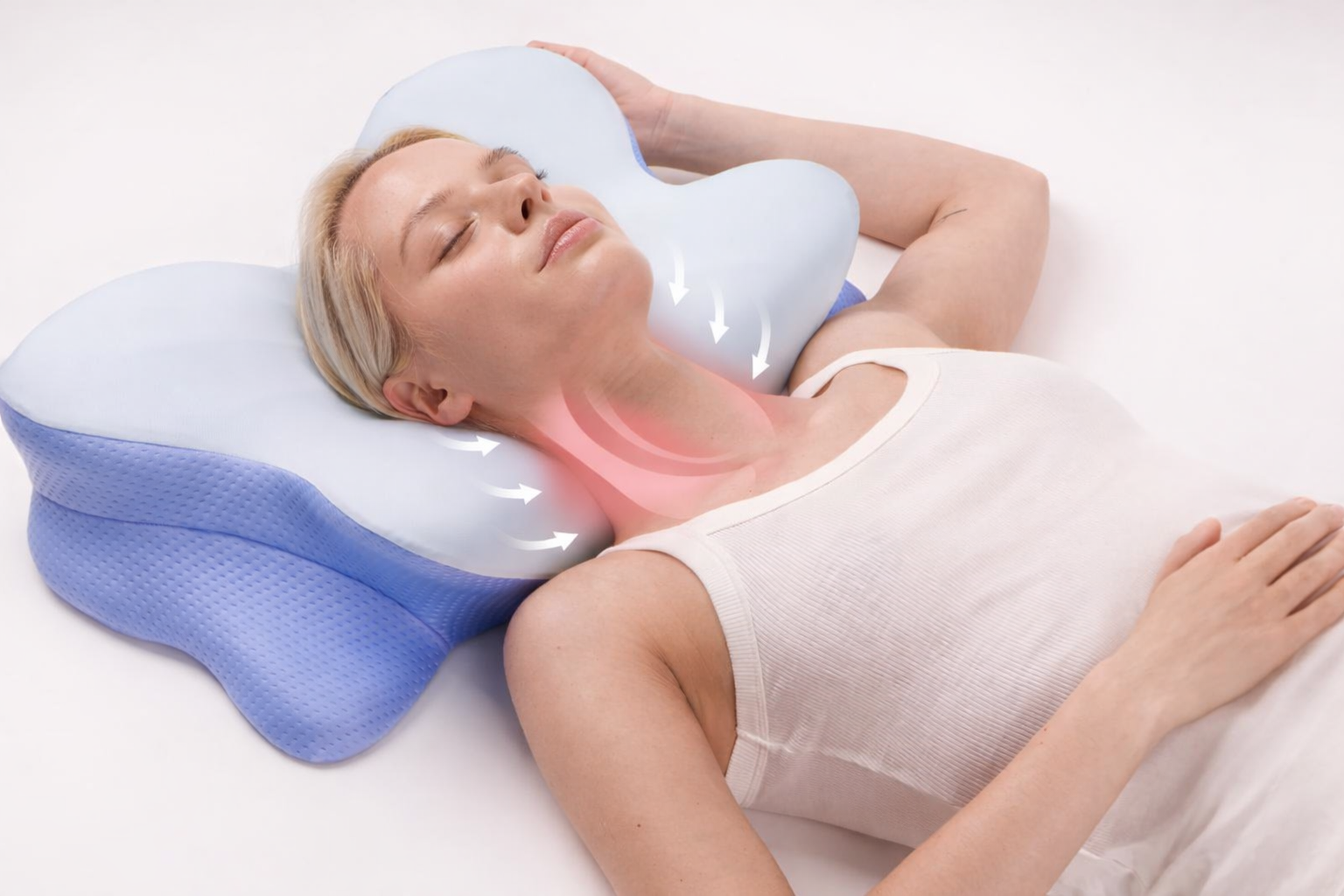
Applying the guidance above, a pillow built specifically for neck cradling and spinal alignment — rather than a generic rectangle of fill — tends to check more of these boxes at once. The Derila Ergo Pillow uses a butterfly-shaped memory foam core designed to give back and side sleepers a lower center for the head and raised support along the neck, which is the same shape principle recommended for those positions above.
That said, no single pillow, including the Derila Ergo Pillow, replaces the basics covered in this guide: know your sleep position, judge loft and firmness honestly, and give any new pillow a fair adjustment period before deciding it's not right for you.
Sleep Comfort & Pillow FAQs
If your head tilts noticeably up or down on your back, or your ear doesn't line up with your shoulder on your side, the height isn't matched to your position.
Side sleepers generally need a taller, firmer pillow, often four to six inches, to fill the gap between the ear and mattress.
Its cradle-and-wing shape is designed to support back and side sleepers' neck alignment, though comfort still varies by body type and personal preference.
Roughly every one to three years, or sooner if it has gone flat, lumpy, or no longer holds its shape.
More guides on pillow support and comfort
How Memory Foam Adapts to Support Your Neck
The science of viscoelastic foam and how it molds to your shape.
Read the guide →Understanding Cervical Pillows: Features and Benefits
What makes a pillow "cervical" and who benefits most.
Read the guide →Back to Derila Ergo Pillow
See materials, pricing, and the full product overview.
Visit the main page →