Understanding Cervical Pillows: Features and Benefits
What the word "cervical" actually means for a pillow, and who tends to benefit most
"Cervical pillow" shows up everywhere in pillow shopping, but the term has a specific meaning rooted in anatomy, not just marketing. This guide breaks down what makes a pillow cervical, its defining features, its realistic benefits and limits, and how a contoured design like the Derila Ergo Pillow reflects these same principles.
What is a cervical pillow, exactly?
The word "cervical" comes from the Latin term for neck, and in anatomy it refers specifically to the cervical spine — the seven vertebrae that make up the neck section of your spinal column. A cervical pillow, sometimes called an orthopedic or contour pillow, is built around supporting that specific curve rather than acting as a generic cushion under the whole head.
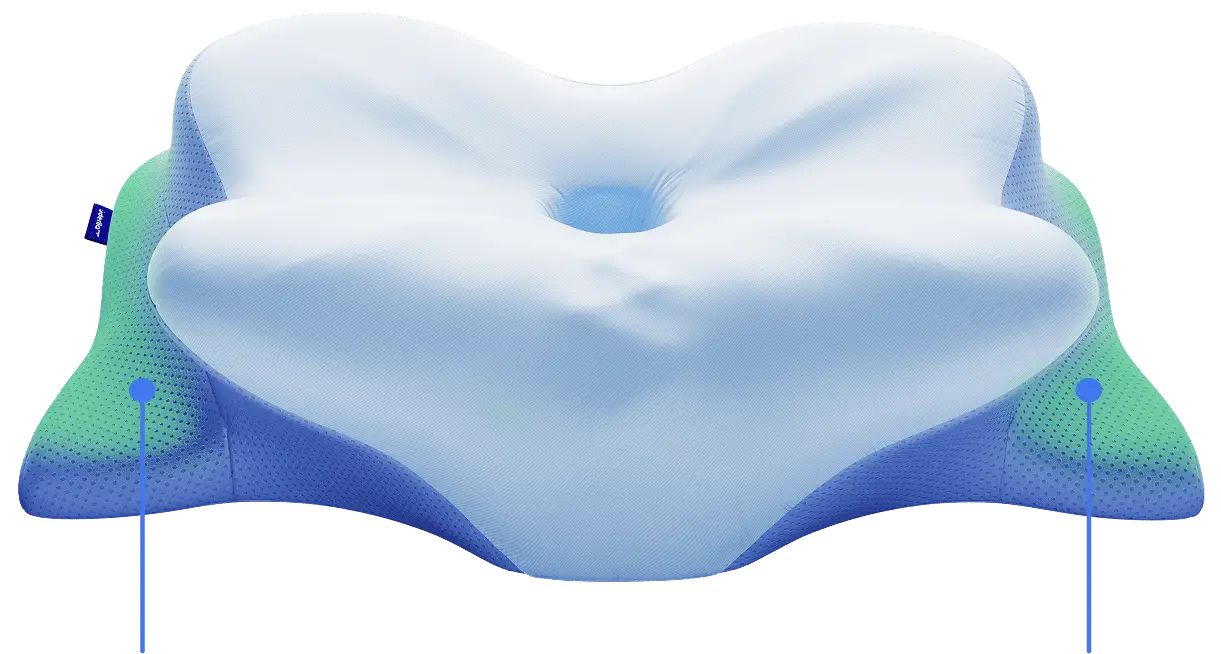
Unlike a standard rectangular pillow, which is essentially a flat slab of fill, a cervical pillow has a deliberate shape: typically a lower, shallower center where the head rests, combined with raised or thicker edges that fill the space under the neck. Some versions use a simple curved wave shape, while others, like the Derila Ergo Pillow, use a butterfly-style contour with distinct raised wings on either side of a central hollow.
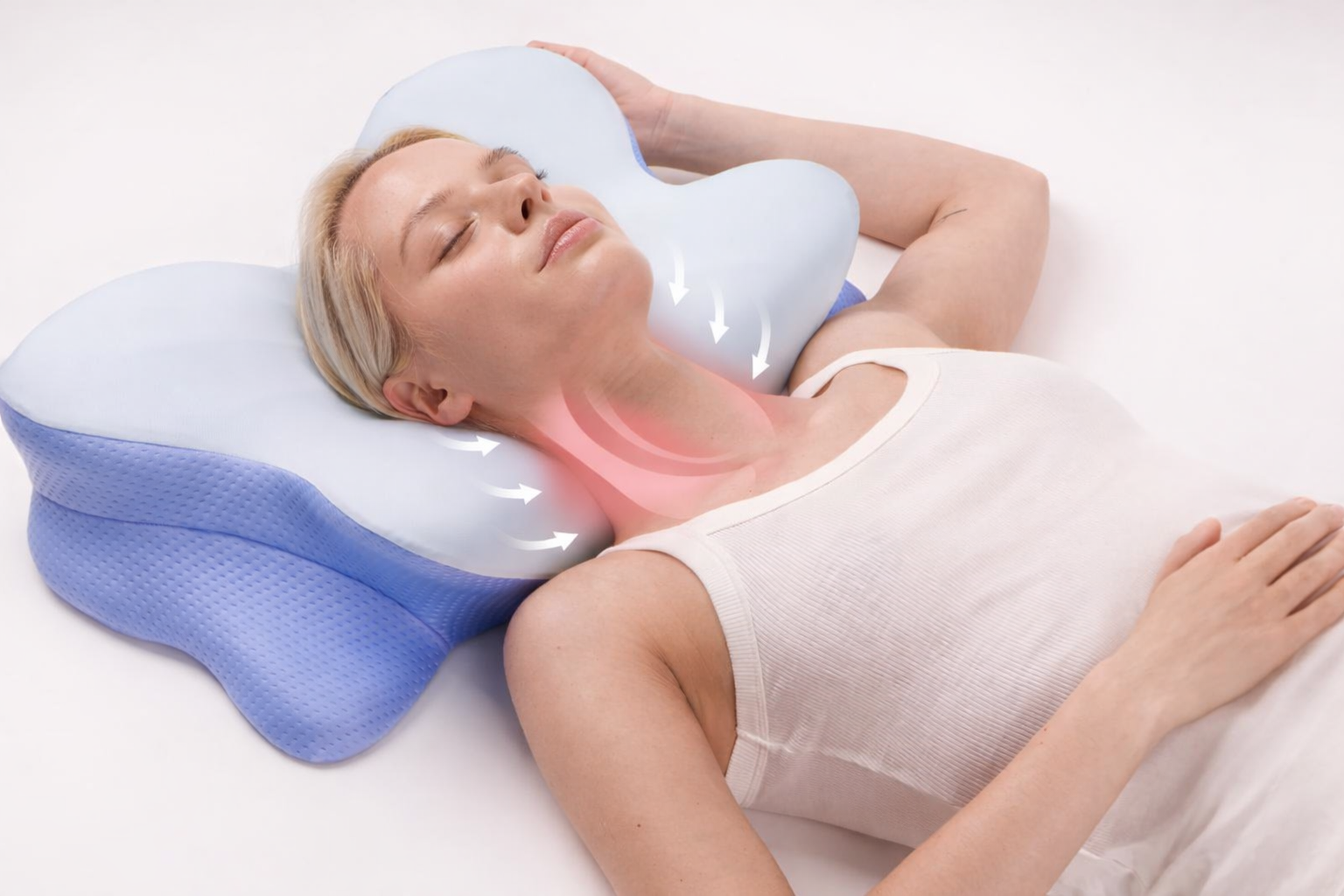
This design exists because a flat pillow leaves a gap under the natural curve of the neck when you lie on your back, and doesn't fill the space created by the shoulder when you lie on your side. A cervical pillow's shape is meant to close that gap directly, so the neck isn't left unsupported for hours at a time.
It's worth being clear that "cervical pillow" is a design category, not a single fixed shape — the market includes curved wave designs, dual-height designs for different body sizes, and contoured designs with an "X" or butterfly profile such as the one used in the Derila Ergo Pillow.
The features that define a cervical pillow
Contoured profile
A lower center for the head paired with raised edges or wings for the neck, rather than one uniform height across the whole pillow.
Firmer, structured support
Cervical pillows are typically made from memory foam or latex rather than loose down or fiber, since a stable shape is central to how they work.
Position-specific zones
Many designs, including the Derila Ergo Pillow, offer slightly different support depending on where your head lands, accommodating both back and side sleeping.
Breathable outer cover
Because the foam core sits close to the skin, a soft, ventilated cover is a common feature to help manage heat build-up overnight.
What cervical pillows genuinely help with
The most consistently reported benefit of a well-fitted cervical pillow is helping maintain the neck's natural curve while lying on your back, and preventing the neck from bending sideways while lying on your side. Both reduce the amount of overnight muscle strain your neck otherwise has to absorb.
Beyond that core function, people commonly report fewer instances of waking up with a stiff or sore neck, a more consistent sleep position through the night since the shape naturally guides the head back to center, and, for some, a modest reduction in tension headaches linked to poor neck posture. The Derila Ergo Pillow's butterfly contour is built around this same idea — using a lower head cradle and raised wings so the shape does the alignment work automatically.
Who tends to benefit most from a cervical pillow
- ✓Back and side sleepers looking for more consistent neck support than a flat pillow provides.
- ✓People who wake up with neck stiffness that seems tied to how they slept rather than an injury.
- ✓Desk workers whose daytime posture already puts strain on the neck and upper shoulders.
- ✓Anyone replacing a flattened, unsupportive pillow who wants a shape built specifically for neck alignment, like the Derila Ergo Pillow, rather than another generic rectangle.
- ✓Committed stomach sleepers are generally the exception — a lower, flatter pillow usually suits that position better than a structured cervical contour.
Cervical pillow feature-to-benefit breakdown
| Feature | What It Does | Practical Benefit |
|---|---|---|
| Lower center cradle | Lets the head settle without tilting the neck forward | More neutral head position on the back |
| Raised side wings | Fills the gap created by the shoulder | Keeps the spine level while side sleeping |
| Firm, structured foam | Resists collapsing under the head's weight | Consistent support that doesn't flatten overnight |
| Breathable cover | Improves airflow across the foam surface | Reduces heat build-up against the skin |
What a cervical pillow won't do
It's worth being honest about the limits here, since genuine guidance matters more than hype. A cervical pillow, including the Derila Ergo Pillow, is a sleep-support product, not a medical treatment. It's not a substitute for diagnosis or treatment of a chronic neck condition, herniated disc, or nerve-related pain, and results vary based on body type, mattress firmness, and how consistently the pillow is used and positioned correctly. Most people also need a short adjustment period of a few nights before a firmer, contoured shape feels fully natural. If neck pain is persistent, worsening, or linked to an injury, a healthcare professional should be the first stop — a better pillow is a supporting factor, not a cure.
Cervical Pillow FAQs
It refers to the cervical spine, the neck section of your spine. A cervical pillow is shaped to support that specific curve.
The terms are largely used interchangeably, both describing pillows built to support the neck and spine in a neutral position.
It follows the same design logic — a lower center for the head and raised wings for the neck, built from contoured memory foam.
Anyone with a diagnosed neck or spine condition should check with a doctor first, since incorrect positioning can occasionally aggravate certain issues.
More guides on pillow support and comfort
Tips for Improving Sleep Comfort with the Right Pillow
Matching pillow shape and firmness to your sleep style.
Read the guide →How Memory Foam Adapts to Support Your Neck
The science of viscoelastic foam and how it molds to your shape.
Read the guide →Back to Derila Ergo Pillow
See materials, pricing, and the full product overview.
Visit the main page →